
Who
NGI Foundation is a youth leadership organisation building visibility, access, and opportunity for emerging African leaders.
Case study for Mission-Driven Programme and Operations Platform
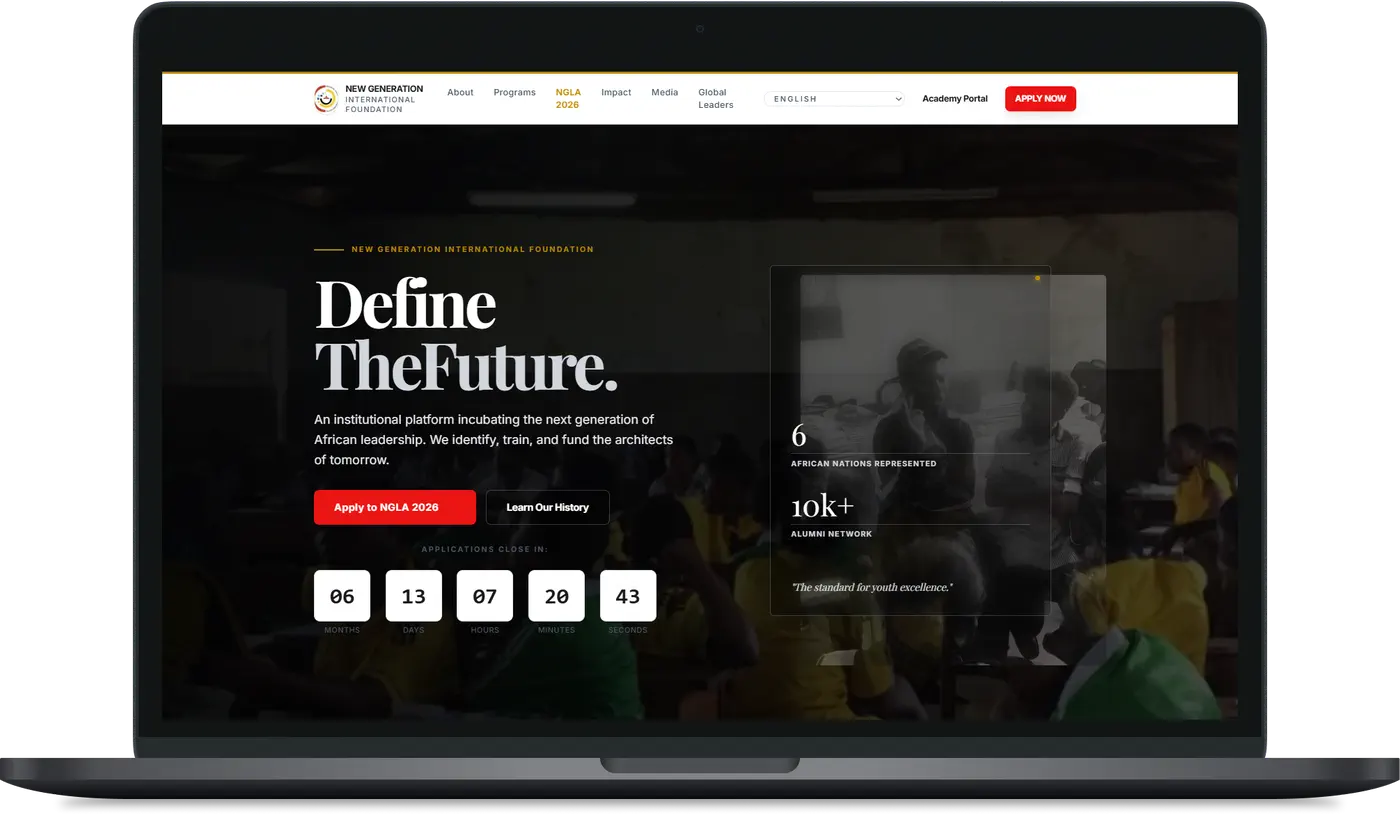
NGI Foundation needed more than a brochure site. The platform had to introduce the organisation clearly, present its programmes and impact, support media visibility, and give future leaders a smooth route into NGLA 2026 through application, payment, dashboards, and staff support tools.
This is the shortest useful read on the project.
Who
NGI Foundation is a youth leadership organisation building visibility, access, and opportunity for emerging African leaders.
What
A full website and platform covering the foundation story, programmes, impact, media, global leaders, Academy access, and the NGLA 2026 application journey.
What Changed
The experience moved from a lighter public presence to a joined-up platform where people can discover the mission, apply, pay, track progress, and interact with staff support flows.
The work had to hold publicly, technically, and operationally.
The project is useful as proof when the context, implementation and handover decisions stay connected.
The problem
NGIF needed a site that could do more than introduce the foundation. It had to explain the mission clearly, give space to programmes and impact, build public trust, and help applicants move confidently through NGLA 2026.
Our role
Dev4Ø4 shaped the platform from the public-facing experience through to the application journey, payment flow, dashboards, and the internal tools staff need to keep the programme running smoothly.
System decision
We delivered a joined-up platform where visitors can explore NGI Foundation's story, programmes, media, and leadership ecosystem, then move into application, payment, and ongoing support without friction. Within the first 10 weeks, the platform processed an estimated 420 applications and about R148,000 in application-fee volume via a single guided intake and payment journey.
Quality and handover
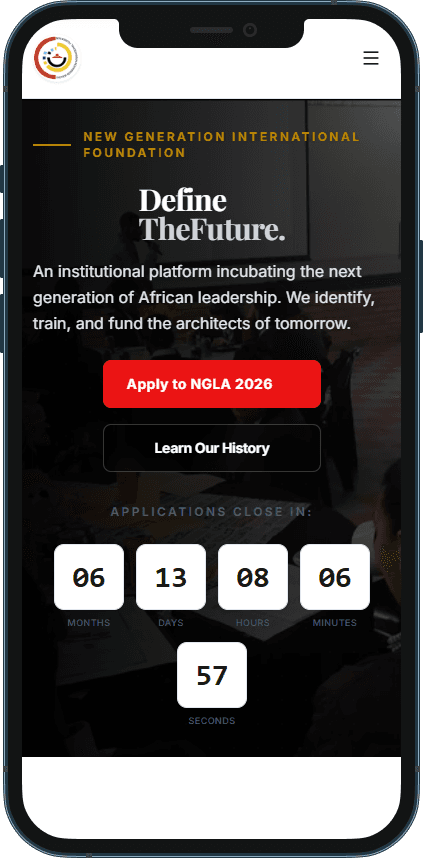
The experience was tuned for certainty, mobile use, and accessible interaction so the platform stays usable while carrying a large amount of content and programme flow. Clear route structure, shared UI patterns, and modular data flows make the platform easier to grow as NGIF expands its programmes and internal operations.
The architecture notes stay at the level supported by the project dossier.
The platform was structured to serve different audiences clearly: public visitors, NGLA applicants, Academy participants, ambassadors, and internal staff.
Beyond the public site, the product includes the practical features needed to run a modern programme platform day to day.
The build had to be dependable enough for a public organisation while staying flexible for future programme growth.
These evidence notes point to the project surfaces that made the delivery legible and maintainable.
Core modules behind the public product and internal operations.
Application Funnel
Form and status logic supports draft-to-submitted progression with clearer operational handoff.
Payment Reconciliation
Checkout and webhook handlers reconcile transactions against application records.
Admin Surface
Operational dashboard tools cover applications, payments, messaging, and diagnostics.
Search visibility and runtime quality were addressed as part of product delivery.
SEO Routing
Dynamic slugs, redirects, and metadata generation support content discoverability.
Performance Strategy
Translation and live-feed behaviours were tuned to reduce unnecessary homepage overhead.
Verification
Passing lint, typecheck, tests, and build gates were documented in review evidence.
Only signals that help a buyer understand what improved and why it matters stay on the page.
Page Routes
46
This reflects delivery scale and the amount of user journeys managed under one architecture.
As of 23 February 2026
API Routes
31
The API footprint shows how much business logic is automated and governed by backend controls.
As of 23 February 2026
Component Files
66
Reusable components reduce maintenance risk and speed up future releases.
As of 23 February 2026
Active Supabase Migrations
24
A tracked migration history improves auditability and lowers deployment risk for future changes.
As of 23 February 2026
Automated Test Snapshot
5 unit/integration + 4 e2e specs
Passing automated checks reduce regression risk before each release.
As of 18 February 2026
Deepen the storytelling around impact, alumni journeys, and programme outcomes.
Start with the assessmentIf the shape is still unclear, start with the assessment. If the brief is already firm, use the project enquiry instead.
The point is to get the scope clearer before the project becomes expensive to steer.