
Phase 01
Clarify
We work out the goals, constraints, dependencies, and risks before anyone starts building.
You leave with
You get a clearer brief, earlier risk flags, and a better sense of fit.
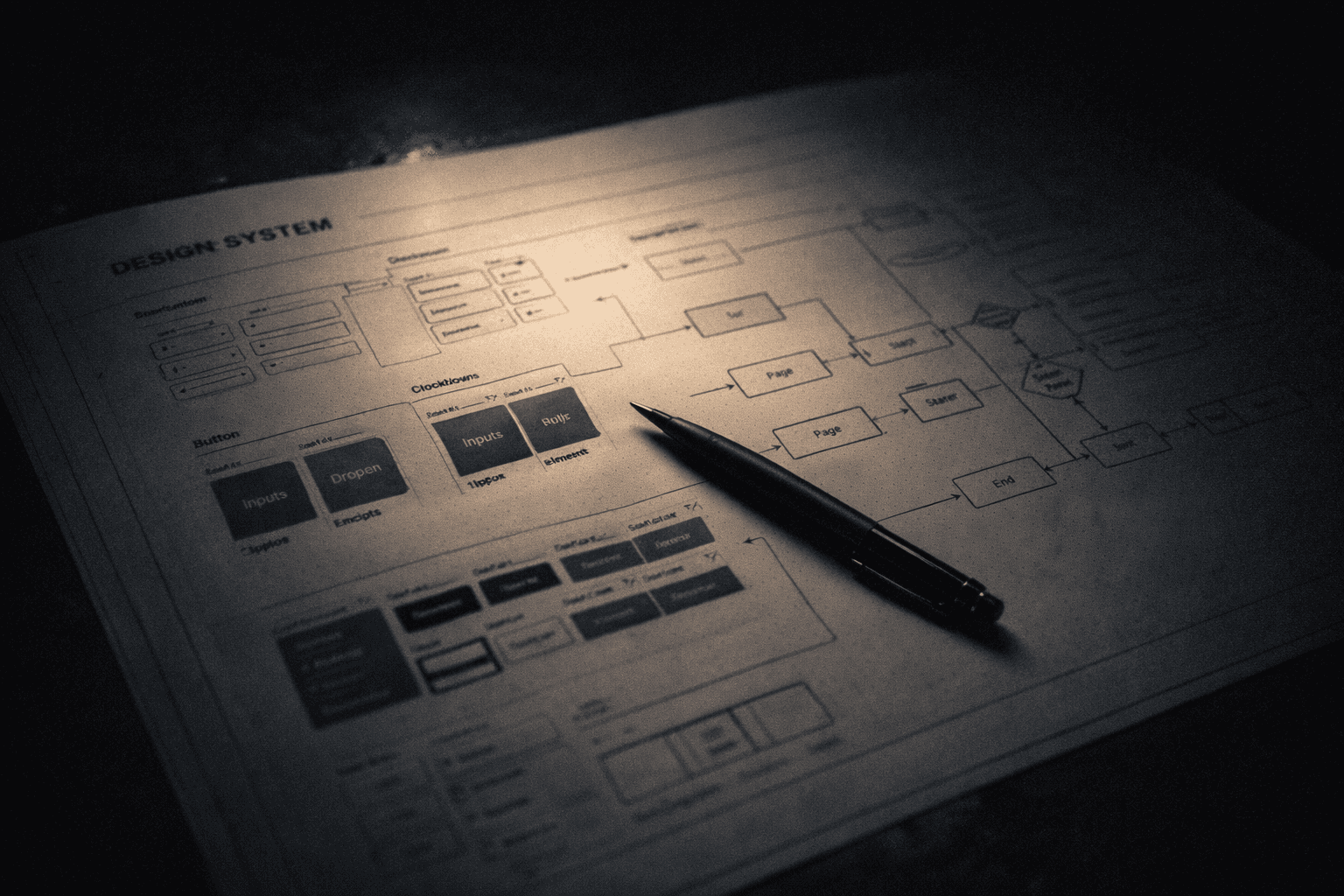
Clients should know the current phase, the next decision, and what they will receive before the work moves on. That is the standard.
Studio note
A clearer route into the work, framed with the same editorial discipline as the homepage.
PROCESS NOTE
Simple on purpose. Clear by design.
The process exists to reduce guesswork, surface risk early, and make sure decisions happen in the right order.
DELIVERY SEQUENCE
Phase 01
We work out the goals, constraints, dependencies, and risks before anyone starts building.
You leave with
You get a clearer brief, earlier risk flags, and a better sense of fit.
Phase 02
The brief becomes structure, user flow, visual direction, and a technical plan tied to what the project needs to do.
You leave with
You get clear decision points instead of vague momentum.
Phase 03
The work is delivered with QA, accessibility, and performance checks built into the process, not added at the end.
You leave with
You get launch-ready work with fewer late surprises.
Phase 04
If support continues after launch, the platform is kept stable, useful, and easier to improve over time.
You leave with
You get a healthier live system and a clearer next-step roadmap.
WHAT THE PROCESS PROTECTS
The point is not to add theatre around delivery. The point is to reduce expensive uncertainty before it hardens into rework.
Requirements are settled early enough to keep scope drift and expensive reversals lower.
Decisions are closed in sequence so approval does not become a blocker later in the build.
Accessibility, QA, and performance checks catch problems before your users do.
The work should be easier to own once it is live, not harder to maintain after the project ends.
WHY CLIENTS PREFER THIS
It protects both sides, keeps responsibility visible, and makes the work easier to carry once it goes live.
Benefit 01
You can see what is in progress, what has changed, and where input is needed without chasing updates.
Benefit 02
The process is designed to catch loose scope and hidden assumptions before they become expensive.
Benefit 03
There is a clear decision owner on both sides, so blockers move faster and ownership stays visible.
CLOSING FRAME
One direct next step, carried with the same editorial restraint as the homepage.
Use the assessment if the scope still needs shaping. Use the project brief when the work is already clear and ready for a direct fit review.
Guidance
The goal is not a longer process. The goal is fewer expensive mistakes once the work is moving.